Workbook Overview
Thinking in Systems
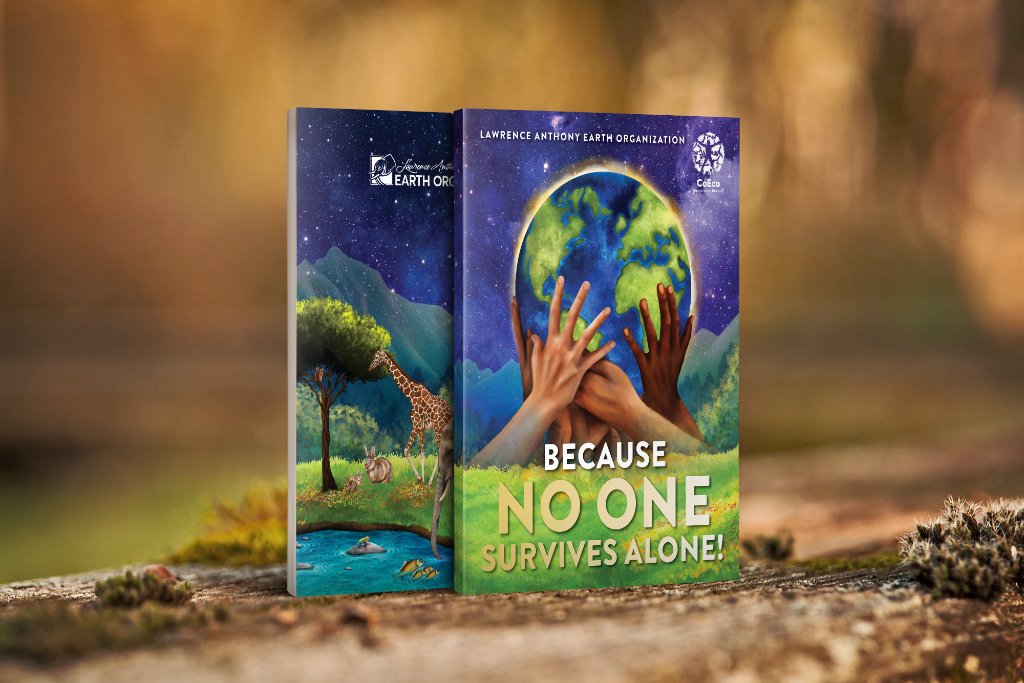
Because No One Survives Alone is the intermediate CoEco curriculum, designed for students aged 11–16. At this level, students move from awareness to understanding, learning to see the world not as a collection of separate things, but as a network of relationships where everything affects everything else.
The workbook introduces systems thinking as a framework for understanding environmental challenges, and personal responsibility as the foundation for addressing them. Students explore why problems like water scarcity, soil degradation, and biodiversity loss happen, not just what they are.
By the end of the program, students have completed real practical exercises that connect their learning to observable, measurable outcomes in their own environment.
Core Focus Areas
What Students Explore
- ✓Interdependence: How every element of an ecosystem, living and non-living, supports and is supported by every other element.
- ✓Systems Thinking: The ability to trace causes, follow consequences, and understand complex problems without oversimplifying them.
- ✓Personal Responsibility: The recognition that individual choices have real ecological consequences, and that this gives every person genuine power to effect change.
- ✓Environmental Awareness: A working understanding of the key systems, water, soil, vegetation, wildlife, that sustain all life.
Practical Exercises
Learning That Connects to the Real World
Student Outcomes
What Graduates Take With Them
- ✓Students can identify and describe multiple interdependent systems in their environment
- ✓Participants demonstrate increased awareness of how personal choices affect living systems
- ✓Students complete a community conservation project with measurable outcomes
- ✓Graduates show stronger critical thinking and problem-solving skills in science subjects
Get Involved
Support CoEco for Ages 11–16
Your support directly funds this program. Every contribution helps us reach more communities, restore more land, and protect more of the planet we all share.